MOQ vs. MOQ: How Factory Minimums Shape Your First Order
Factory minimums set the lowest quantity you can produce. These limits drive per unit cost, fabric usage, and lead times. Knowing the difference between raw material minimums and production minimums helps you structure a realistic first order.
- Factory minimums are often tied to cutting patterns and fabric width, not just production labor.
- Lowering the first order size usually increases the cost per unit due to fixed setup fees.
- Splitting a single style into multiple small orders rarely saves money unless the factory has specific small batch lines.
- Requesting a written quote breakdown clarifies where minimums apply.
How factory minimums actually work
The apparel MOQ is not a single number. It is a set of constraints that change depending on where in the production chain you measure. A factory may accept a 500 piece order for a simple plain t-shirt but reject a 500 piece order for a garment with three seams, a zipper, and a woven label.
The first constraint is usually the cutting floor. Fabric comes in wide rolls, often 150 centimeters or wider. The cutting table must plan a layout that uses the material efficiently. If your design requires many small, irregular pieces, the offcuts waste increases. The factory calculates the total fabric needed for the minimum quantity. If that total does not match a full roll or a standard order size from the fabric mill, the factory may reject the order.
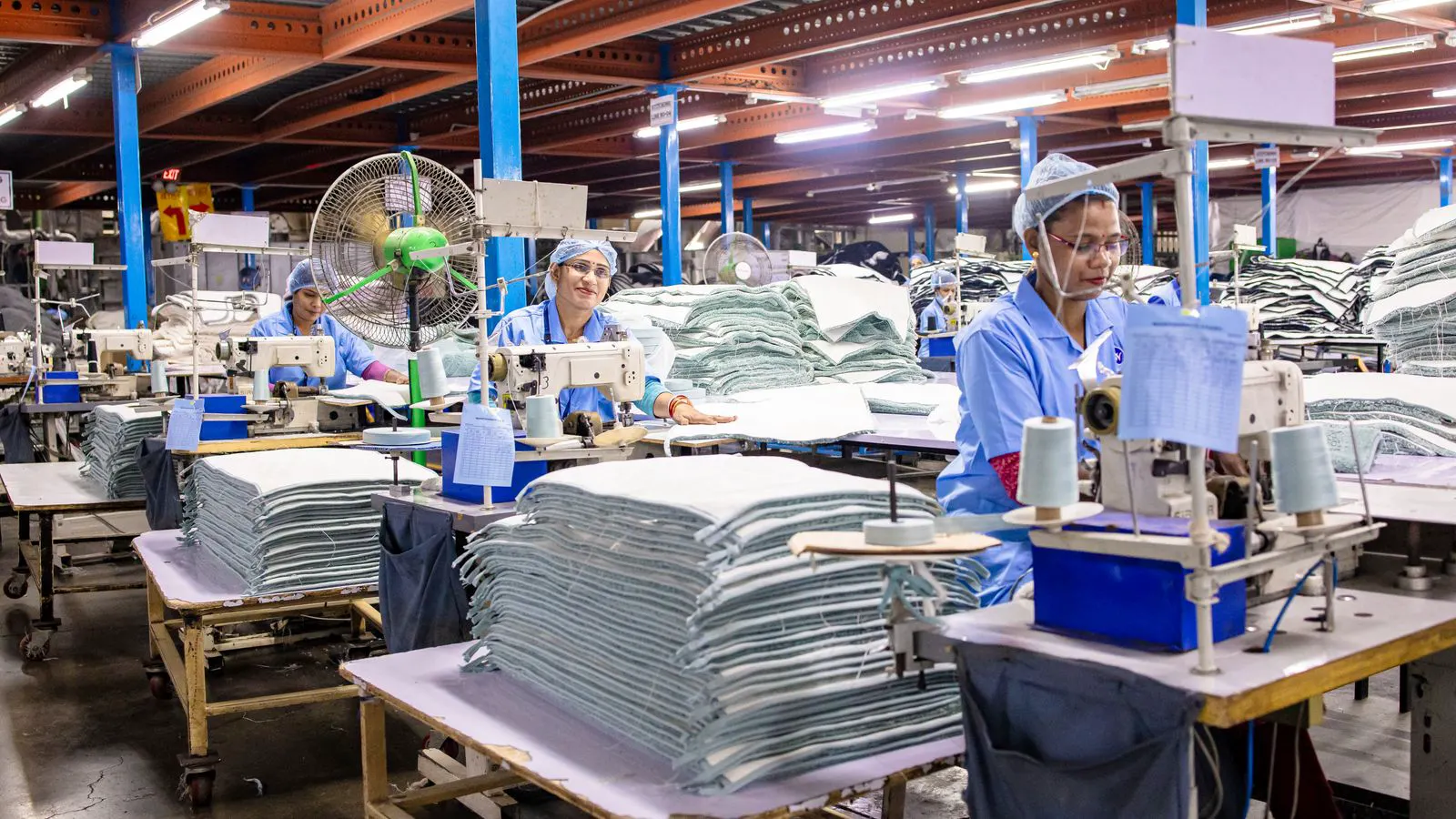
The second constraint is the sewing line. A line has a fixed number of machines. If a style takes three minutes per unit to sew, and the line has ten machines, the total time is fixed. For a small order, the setup time for threading, marking, and quality checks becomes a large percentage of the total production time. The factory adds this as a surcharge or sets a higher minimum quantity to make the run profitable.
The third constraint is the fabric supplier. Many mills sell by the roll. A roll might contain enough fabric for 400 or 500 units. If you order 300 units, you are buying fabric that cannot be resold. The cost of that unused material is built into your price.
Why small first orders cost more per unit
When you place a small order, the fixed costs do not drop. The factory still needs to create the production pack. This includes cutting templates, sewing instructions, quality check sheets, and packaging. The cost of creating these documents is the same for a 100 piece order as it is for a 10,000 piece order.
The per unit cost rises because these fixed costs are divided by a smaller number. A factory might charge a setup fee of a few hundred dollars for a new style. On a 10,000 piece run, that fee is a fraction of a cent per garment. On a 500 piece run, the same fee adds a significant amount to the cost of each unit.
There is also the issue of waste. In a large run, a small percentage of fabric offcut is acceptable. In a small run, the same absolute amount of waste becomes a larger percentage of the total fabric cost. The factory may add a waste allowance to the quote to protect its margin.
Comparing approaches to managing minimums
| Option | Best for | Limitations |
|---|---|---|
| Standard production line | Brands with stable demand and higher budgets | High minimums, longer lead times, less flexibility for changes |
| Small batch dedicated line | Early stage brands testing designs | Higher per unit cost, limited style complexity, shorter production windows |
| Shared line production | New styles with moderate quantities | Shared costs with other clients, potential for delay if the line is full |
| Made to order cutting | Single item or very low quantity samples | High cost per unit, no bulk fabric discount, limited fabric selection |
| Dropship or print on demand | Digital products and on demand sales | No physical inventory control, limited fabric quality, high per unit cost |
Standard production line
This is the default method for most apparel factories. The line is dedicated to one client or one style for the duration of the run. It is the most efficient method for volume. The minimums are highest here because the factory reserves machines, labor, and space for a specific period. If you cannot meet the minimum, the factory will not use this line for your order.
Small batch dedicated line
Some factories have a separate line or a shift dedicated to smaller runs. This line has fewer machines and a smaller crew. It is designed for orders between a few hundred and a few thousand units. The per unit cost is higher than the standard line because the setup time is a larger share of the production time. However, it offers more flexibility. You can make changes to the design during the run more easily than on a standard line.
Shared line production
In this model, your order is mixed with other clients on the same line. The factory spreads the cost of the setup across multiple styles. This can lower the per unit cost for small orders. The limitation is control. You do not get a dedicated crew. Your order may be delayed if another client’s production falls behind. Quality control is harder to manage because the line is constantly changing setups.
Made to order cutting
This is the most expensive option. The fabric is cut for your specific order only. There is no bulk fabric purchase. The cutting layout is optimized for your specific quantity. It is useful for samples or very low quantity production. It is not viable for commercial runs because the fabric cost per unit is too high.
Dropship or print on demand
This is not traditional apparel manufacturing. The garment is produced only after a customer places an order. It eliminates inventory risk but does not solve the factory minimum problem. The per unit cost is very high because there is no economy of scale. The fabric and labor costs are paid for each single unit.
When to pick each approach
Pick the standard production line if you have a proven design and a clear sales forecast. You need the lowest per unit cost. You have the capital to hold inventory. You are willing to wait for a longer lead time. You are not going to make frequent design changes.
Pick the small batch dedicated line if you are testing a new style. You need to keep the per unit cost manageable while producing a small quantity. You want to have the garment in hand quickly to test the market. You are okay with a higher cost per unit in exchange for speed and flexibility.
Pick shared line production if you have a low margin and cannot afford the dedicated setup cost. You have a flexible schedule and can accept a variable lead time. You are not sensitive to minor quality variations that can happen when a line switches between styles.
Pick made to order cutting if you need a sample or a very small quantity for a specific client. You are paying for convenience and speed. You do not expect to sell a large number of units. You are using the factory to validate the design before committing to a larger run.
Pick dropship if you have zero inventory risk tolerance. You are selling a digital product or a very niche item. You accept a high per unit cost and a long lead time for the customer. You are not building a brand based on consistent product quality.
How to negotiate the minimum order quantity
Do not ask if the factory can lower the minimum. Ask why the minimum is set at that level. The answer will usually be specific. It might be the fabric roll size. It might be the cutting pattern layout. It might be the number of machines on the line.
If the minimum is tied to the fabric roll, ask if you can buy the roll and return the unused fabric. Some factories allow this for large orders. For small orders, it is rarely feasible. You can also ask if the factory has a standard fabric pack that matches your quantity. You might be able to use a different fabric width that fits your order size.
If the minimum is tied to the cutting pattern, ask if you can simplify the design. Remove a seam. Change a pocket placement. Simplify the collar. Every simplification reduces the complexity of the cutting layout and the sewing time. This can lower the effective minimum quantity.
If the minimum is tied to the sewing line setup, ask if you can share the setup cost with another order. Some factories will allow you to split the setup fee with another client if the styles are similar. This is rare but possible.
Request a written quote breakdown. Look for a line item that says “setup fee” or “minimum charge.” If the quote is a single number, ask for the breakdown. This shows you where the minimum is coming from. It also gives you use to negotiate. You can say, “I see the setup fee is high. If I increase the order to 500 units, can you lower the setup fee?”
Common mistakes in first order planning
The most common mistake is ordering the minimum quantity without considering the fabric cost. The factory quote includes the fabric cost. The fabric cost is tied to the roll. If you order the minimum quantity, you are still paying for a full roll of fabric. The price per unit is high.
The second mistake is underestimating the sample cost. A sample is not a free bonus. It is a production run of one unit. It costs more per unit than the production run. If you order a small production run, you must budget for the sample separately.
The third mistake is ignoring the lead time. A small order takes the same amount of time to set up as a large order. The production time is shorter, but the setup time is the same. The total lead time is often similar. You cannot rush a small order without paying a premium.
The fourth mistake is not checking the fabric availability. Small orders are easier to cancel or delay. If the fabric is not available, the factory cannot start. You must confirm the fabric is in stock before you commit to the order.
How to structure a realistic first order
Start with a sample. This is non negotiable. The sample is your proof that the design works. It is your proof that the fabric is good. It is your proof that the factory can produce the garment to your standard.
After the sample, decide on the first order size. Do not order the factory minimum if you do not need it. Order a quantity that you can sell or that you can justify holding. If you order more than you can sell, you are stuck with inventory. If you order less, you pay a higher per unit cost.
Look at your cash flow. The factory will ask for a deposit, usually 30 to 50 percent. The balance is due before shipment. You need the cash for the deposit and the balance. Do not order more than you can afford to pay for.
Plan for the next order. If the first order sells well, you will need to reorder. If the first order does not sell, you will have inventory to manage. The factory minimum for the reorder might be different. Ask the factory what the minimum is for a reorder. It is often lower than the first order minimum because the setup is already done.
How to verify the factory minimums
Do not trust the verbal quote. Get the minimums in writing. The quote should list the minimum quantity for the fabric, the minimum quantity for the sewing, and the minimum quantity for the overall order. If the quote only lists one number, ask for the breakdown.
Check the cutting pattern. Ask the factory to send you the cutting layout. Look at the pieces. If the layout is inefficient, the fabric waste is high. The minimum quantity will be higher to cover the waste. You can suggest a change to the layout to reduce the waste.
Check the sewing instructions. Look at the number of steps. Each step adds time. Each step adds cost. If the style has many steps, the minimum quantity will be higher. You can simplify the style to reduce the steps.
Check the quality check process. Ask how many units are checked. If the factory checks every unit, the minimum quantity will be higher because the quality check time is part of the production time. If the factory checks a sample, the minimum quantity can be lower.
Frequently asked questions
Can I order less than the factory minimum?
Generally, no. The factory will not produce below the minimum because the setup cost and fabric waste cannot be recovered. You may be able to negotiate a higher per unit price to cover the loss.
Why is the first order minimum higher than the second order minimum?
The first order includes the cost of creating the production pack and setting up the line. The second order uses the existing setup, so the minimum is lower.
Is it cheaper to order a larger quantity to get a lower per unit cost?
Yes, usually. A larger quantity spreads the fixed setup costs over more units. However, you must be able to sell the inventory or hold it without incurring storage costs.
Can I mix different styles in one order to meet the minimum?
It depends on the factory. Some factories allow mixed orders if the styles share the same fabric or sewing line. This can help you meet the minimum for each style.
What is the best way to find a factory with low minimums?
Look for factories that specialize in small batch production. Ask for a written quote breakdown. Check if they have a dedicated small batch line. Read reviews from other small brands.